
Issue 02 | August 2026
A gallon of renewable fuel can displace fossil oil in a college boiler, a district-heating system, or an industrial steam plant.
But under current U.S. renewable-fuel policy, where that heat goes can materially change the economics of the fuel.
That distinction deserves more attention.
It is also a topic that feels familiar to me.
I spent more than a decade living in Finland, began my bioindustry management consulting career there, and am now a Finnish citizen. Finland offers some compelling examples of how forest-based energy can work when feedstock, established industry, infrastructure, energy markets, and policy are considered as one system.
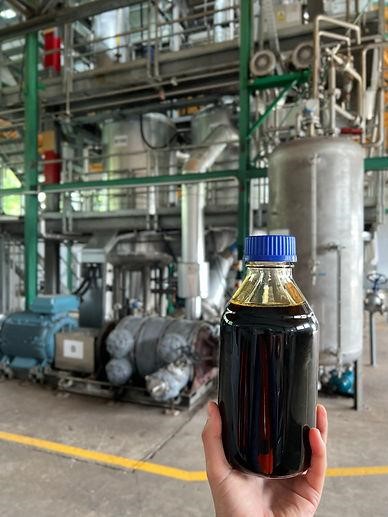
Fortum’s fast-pyrolysis plant in Joensuu, for example, was integrated directly into an existing combined heat and power plant. The integration allowed the pyrolysis process to use heat that otherwise would not have been utilized, while local wood chips and forest-industry byproducts provided feedstock. The approximately €30 million project also received about €8 million in government investment support. Finland more broadly has built a heating system in which bioenergy, district heating, forest-industry sidestreams, energy taxation, and carbon policy have reinforced one another.
The lesson for the United States is not that Finnish economics can simply be copied.
It is that renewable heat becomes much more competitive when local feedstock, existing industrial assets, concentrated heat demand, fossil-fuel economics, carbon value, and enabling policy align.
That same alignment could diversify U.S. heating supplies, reduce exposure to volatile fossil-fuel costs, lower emissions, and create additional markets for low-value wood and forest residuals—markets that can also help support active forest management.
A useful equation is:
Renewable Heat Opportunity = Feedstock Fit + Fuel Quality + Existing Infrastructure + Competing Energy Cost + Carbon Value + Policy Treatment + Geography
Change one of those variables, and the opportunity can look very different.
The Current
A recent Bangor Daily News article brought that question closer to home.
Maine remains highly dependent on heating oil while also possessing an extensive forest-products supply chain, former mill infrastructure, and communities looking for new markets for lower-value wood and residuals. The article highlighted two developing projects: Castlerock Biofuels’ proposed fast-pyrolysis facility in Millinocket and Biofine Developments Northeast’s separate cellulosic-fuel project at the former Lincoln Paper and Tissue mill. Castlerock is targeting approximately 20 million gallons per year of renewable fuel production.
Maine households consume roughly 250 million gallons of heating oil annually, according to the reporting, making residential heating an obvious target. But Maine also illustrates the tension between different decarbonization pathways: heat pumps have reduced oil dependence, while wood-based liquid fuels have received substantially less state attention.
And residential heating may not be the only—or technically the easiest—market for fast-pyrolysis bio-oil.
Two Heat Markets, Different Economics
“Heating oil” can serve two very different purposes.
One is human comfort: heating homes, schools, hospitals, offices, campuses, and similar buildings.
The other is industrial process heat: generating steam or thermal energy used to dry wood, process food, manufacture paper, heat tanks, produce chemicals, or operate industrial processes.
| Residential / Human Comfort | Industrial Process Heat | |
|---|---|---|
| Demand | Seasonal and weather-driven | Often continuous and year-round |
| Customers | Many dispersed buildings | Fewer, larger users |
| Equipment | Standardized consumer systems | Greater ability to engineer fuel handling |
| Competition | Heating oil, propane, gas, heat pumps | Natural gas, electricity, fuel oil, biomass, waste heat, CHP |
| Bio-oil advantage | Existing liquid-fuel distribution | Large concentrated demand |
Heating oil remains highly regional: about 4.79 million U.S. households used it as their primary heating fuel in winter 2023–24, and approximately 82% were in the Northeast.
Industrial heat is a much larger energy challenge. DOE estimates that process heating accounts for roughly 51% of manufacturing energy use, with more than 90% of that energy supplied by fossil fuels. Natural gas alone accounted for about 45% of U.S. manufacturing fuel consumption in 2022.
That creates an enormous decarbonization opportunity—but not automatically an enormous market for bio-oil.
Cheap pipeline natural gas is difficult for bio-oil to beat. Technology provider BTG Bioliquids describes fast-pyrolysis oil as potentially competitive with heating oil, but generally not with low-priced natural gas in most of the United States and Europe absent favorable regional conditions or policy value.
That makes geography—and policy—decisive.
The Policy and Technical Mismatch
Federal policy currently draws a surprisingly important distinction between these two heat markets.
The Renewable Fuel Standard recognizes qualifying renewable heating oil, and EPA’s expanded definition includes fuels used to generate heat for buildings or facilities where people live, work, recreate, or conduct other activities. The RFS itself covers renewable fuels replacing fossil fuel in transportation, home heating oil, or jet fuel.
But EPA has not extended that same treatment broadly to fuel used for industrial process heat.
The result is unusual:
A qualifying renewable liquid fuel used to warm a university building may carry federal renewable-fuel value.
The same fuel used to produce industrial steam may not.
The carbon does not distinguish whether the heat is warming a classroom or drying a product.
The regulation does.
There is also a technical irony: industrial heat may be the more natural early application for raw fast-pyrolysis bio-oil.
Pyrolysis oil has substantially different characteristics from conventional petroleum fuel—including lower heating value, acidity, water content, viscosity, and materials-compatibility considerations. Industrial users can more readily justify dedicated storage, compatible pumps and piping, fuel conditioning, modified burners, controls, and trained operators.
A residential fuel distributed across thousands of homes has a much smaller tolerance for equipment incompatibility.
So there is an important inversion:
Industrial heat may offer the more technically accommodating market for fast-pyrolysis bio-oil, while human-comfort heating currently receives the clearer federal renewable-fuel incentive.
That mismatch matters because the retrofit itself requires capital.
Carbon Reduction Is Only Half the Investment Case
Consider an illustrative manufacturing facility with an average thermal demand of 50 MW, operating 8,000 hours annually:
400,000 MWh of annual thermal demand.
Assume an appropriately equipped dual-fuel system substitutes bio-oil for 50% of annual fossil-fuel heat.
That means approximately:
200,000 MWh—or 682,000 MMBtu—of fossil heat displaced.
The 50% assumption is not meant as a standard retrofit design. Commercial systems can operate across a range of substitution rates, and multi-fuel burners can preserve fossil-fuel capability when renewable fuel is unavailable. That flexibility can allow a facility to begin with partial substitution and increase renewable use as supply, economics, and operating experience improve.
Using conventional distillate as the displaced fuel, a project at this scale could avoid roughly 50,000 metric tons of direct fossil CO₂ annually before lifecycle adjustments. If a qualifying bio-oil pathway delivered a 70–85% lifecycle reduction, an illustrative net reduction would be on the order of 35,000–43,000 metric tons CO₂e per year.
But carbon reduction does not automatically equal financial return.
A suitable existing boiler may be retained, but the fuel-handling and combustion train may require a multi-fuel or modified burner, compatible storage tanks, pumps, piping, seals, filtration, preheating, controls, unloading infrastructure, and potentially additional monitoring and containment.
That retrofit can be far less capital-intensive than replacing an entire industrial steam system, but there is no reliable universal $/MW retrofit cost: site configuration, tank capacity, burner size, redundancy, permitting, piping distance, and existing infrastructure matter enormously.
The operating economics are even more sensitive.
At 682,000 MMBtu of annual substitution:
Every $1/MMBtu difference between fossil fuel and delivered bio-oil changes annual operating economics by approximately $682,000.
A $2/MMBtu bio-oil premium is about $1.36 million per year.
A $5/MMBtu premium is about $3.4 million per year.
Conversely, when bio-oil is cheaper than the displaced petroleum fuel, those numbers become annual savings.
That is why bio-oil is likely to compete first against delivered fuel oil, not inexpensive pipeline natural gas. Current New England heating-oil markets also illustrate how geographically exposed petroleum-dependent regions can be to high delivered liquid-fuel prices.
Carbon value can help close a premium—but there is no single U.S. carbon price and, more importantly, an industrial user does not automatically receive the prevailing allowance value simply because it reduces emissions. As one Northeast benchmark, the June 2026 RGGI auction cleared at $35 per ton of CO₂.
At a relatively small bio-oil premium, that kind of carbon value can become economically meaningful. At a $5/MMBtu premium, however, carbon value alone would generally be insufficient to close the gap.
Which brings the discussion back to Finland: projects become more compelling when several economic advantages stack together.
Geography Determines Where the Equation Works
Finland’s experience did not emerge from bio-oil being inherently cheaper everywhere.
It benefited from conditions that reinforce one another: large forest-industry supply chains, locally available biomass and industrial co-products, established district-heating and CHP infrastructure, relatively limited dependence on cheap domestic natural gas, energy and carbon policy, and targeted support for commercialization. IEA continues to identify bioenergy—and forestry biomass specifically—as an important part of Finland’s energy system.
Fortum’s Joensuu project is particularly instructive because the pyrolysis facility was integrated into an operating CHP plant rather than developed as an isolated greenfield energy system. Integration improved energy efficiency, while existing infrastructure and local forest-industry feedstocks reduced the need to recreate an entire supply chain.
That is a useful model for North America.
The strongest U.S. opportunities may similarly occur where several conditions overlap:
**Low-cost sustainable woody residuals
- existing forest-industry infrastructure
- expensive or constrained fossil heat
- compatible boilers
- liquid-fuel logistics
- concentrated demand
- carbon or renewable-fuel value**
Maine has many of those ingredients: forest resources, former mill sites, liquid-fuel infrastructure, significant heating-oil dependence, and communities seeking new wood markets.
And the existing forest industry itself may provide the platform.
Existing Forest Industry Could Be the Platform
A pyrolysis project does not necessarily need to build a supply chain from scratch.
Sawmills and pulp-and-paper complexes already aggregate wood. They have procurement organizations, woodyards, loaders, scales, utilities, roads, rail, maintenance personnel, contractors, laboratories, and relationships with landowners and timber suppliers.
They also produce co-products.
Sawdust, clean chips, bark, fines, and other streams may be suitable inputs depending on the conversion technology and fuel requirements.
This suggests a stronger model than:
Build biomass plant → Find wood → Find market
In some regions, the opportunity may instead be:
Existing forest-industry system → Identify suitable underutilized stream → Convert it to a transportable renewable liquid → Deliver energy to a customer that cannot practically use solid biomass
That is industrial integration.
It can also create additional demand for material from forest management and lower-value wood—provided the supply is sustainable, economically recoverable, and not simply assumed to be “available.”
A Developing Commercial Landscape
Several companies and projects help illustrate the market without implying that any particular technology or business model will ultimately prevail.
Ensyn has developed renewable fuel oil through rapid thermal processing and reports institutional and industrial heating applications in North America.
BTG Bioliquids has deployed fast-pyrolysis technology for commercial heat applications and describes industrial boilers as one of the most straightforward markets for pyrolysis oil.
Fortum’s Joensuu project demonstrated integrated fast-pyrolysis production within Finland’s CHP and forest-industry ecosystem.
Other European projects—including plants linked to forest-industry residual streams—further demonstrate the value of locating conversion near existing wood-processing infrastructure.
In Maine, Castlerock Biofuels is pursuing fast-pyrolysis renewable fuel oil, while Biofine is developing a different cellulosic liquid-fuel pathway. Both illustrate renewed interest in using former forest-industry sites and regional wood resources to serve Northeast energy markets.
The common signal is more important than the individual company:
Forest-derived carbon can be converted into a transportable liquid energy carrier that allows renewable energy to move beyond the geographic reach of solid biomass.
But that market depends on a supply chain capable of documenting what it is delivering.
The Supply Base Must Be Ready
A viable bio-oil market requires more than tonnage.
Suppliers may need to demonstrate:
- feedstock type and origin;
- sustainable and durable harvest volumes;
- land ownership and regulatory eligibility;
- harvest or management documentation;
- traceability and chain of custody;
- segregation where required;
- moisture, particle size, bark, ash, and contamination limits;
- seasonal availability and storage;
- delivered-cost economics; and
- documentation sufficient for regulatory and customer audits.
That capability becomes more valuable as emerging fuel markets increasingly depend on carbon intensity, sustainability, and traceability.
The future competitive advantage may not belong simply to the supplier with wood.
It may belong to the supplier who can prove what the wood is, where it came from, how it was produced, what it costs to deliver, and whether that supply remains durable over the life of the project.
And policy determines how much value that preparation can create.
What Policy Could Unlock the Market?
Maine already provides one example of state recognition. The state has considered additional financing and tax measures for forest-based biofuels, although the Bangor Daily News reported that a 2026 tax-credit proposal passed both legislative chambers but was not ultimately funded. Maine’s broader decarbonization strategy has thus far leaned much more heavily toward electrification.
At the federal level, the clearest issue is the distinction between qualifying renewable fuel used for human-comfort heating and fuel used for industrial process heat.
If a renewable fuel can demonstrate credible lifecycle-carbon performance, sustainable sourcing, traceability, emissions compliance, and appropriate fuel quality, policymakers could reconsider whether the purpose of the heat should determine access to renewable-fuel value.
Forest-feedstock rules could likewise better recognize appropriate material generated through forest-health and wildfire-risk-reduction work while retaining meaningful sustainability protections.
And support for first-commercial projects may need to extend beyond the conversion reactor itself. Tanks, burners, terminals, preprocessing, storage, traceability systems, and industrial integration can determine whether a technically successful fuel actually reaches a customer.
The objective should not be to favor bio-oil over heat pumps, electrification, waste heat, solid biomass, or other lower-carbon technologies.
Finland’s lesson is almost the opposite.
Build an energy system with enough flexibility that the best regional combination of resources, infrastructure, economics, and carbon performance can compete.
The Signal Beneath the Headline
The most interesting market for wood-based heating oil may not ultimately be residential heating.
Residential customers offer an established liquid-fuel distribution system and, in some jurisdictions, clearer renewable-fuel policy. But demand is seasonal, heat pumps are reducing oil use in some regions, and residential equipment requires a high degree of fuel compatibility.
Industrial heat offers something different:
large customers, concentrated demand, potentially continuous operation, dedicated fuel handling, and equipment that can be engineered around the fuel.
Manufacturing also remains deeply dependent on fossil heat.
Yet U.S. renewable-fuel policy can assign greater value to a renewable liquid heating a building for human comfort than to the same broader class of fuel displacing fossil energy in an industrial process.
That deserves scrutiny.
The broader forest-industry opportunity is to use existing mills, supply chains, co-products, infrastructure, and workforce to manufacture a transportable form of renewable thermal energy for industries that cannot economically bring solid biomass to the factory.
Done well, that can connect two needs:
industrial decarbonization and durable markets for forest material.
But only where the whole system works:
Sustainable Feedstock + Industrial Infrastructure + Appropriate Technology + Compatible Heat User + Competitive Delivered Economics + Credible Carbon Reduction + Supportive Policy = Durable Market
The technology is only one part of the equation.
A Question for the Field
If a wood-based liquid fuel can demonstrate credible sustainability, lifecycle-carbon, emissions, and fuel-quality performance, should renewable-energy policy care whether the heat is keeping people warm—or keeping an industrial process running?
And what would it take to create more of the conditions that have allowed forest-based heat to succeed in places like Finland: stronger integration with existing industry, better carbon economics, more flexible policy—or simply better alignment between feedstock and the customers who need heat?
I’d be interested in hearing what the economics look like from the ground.
About SilvaCurrent
SilvaCurrent is a forest and bioindustrial intelligence and advisory firm focused on connecting established forest-industry resources, infrastructure, and expertise with emerging markets.
Established Roots. Emerging Industries.


Leave a Reply